
Audi A4 Check Engine Light - EVAP, EGR, and Fuel System OEM Parts That Trigger It
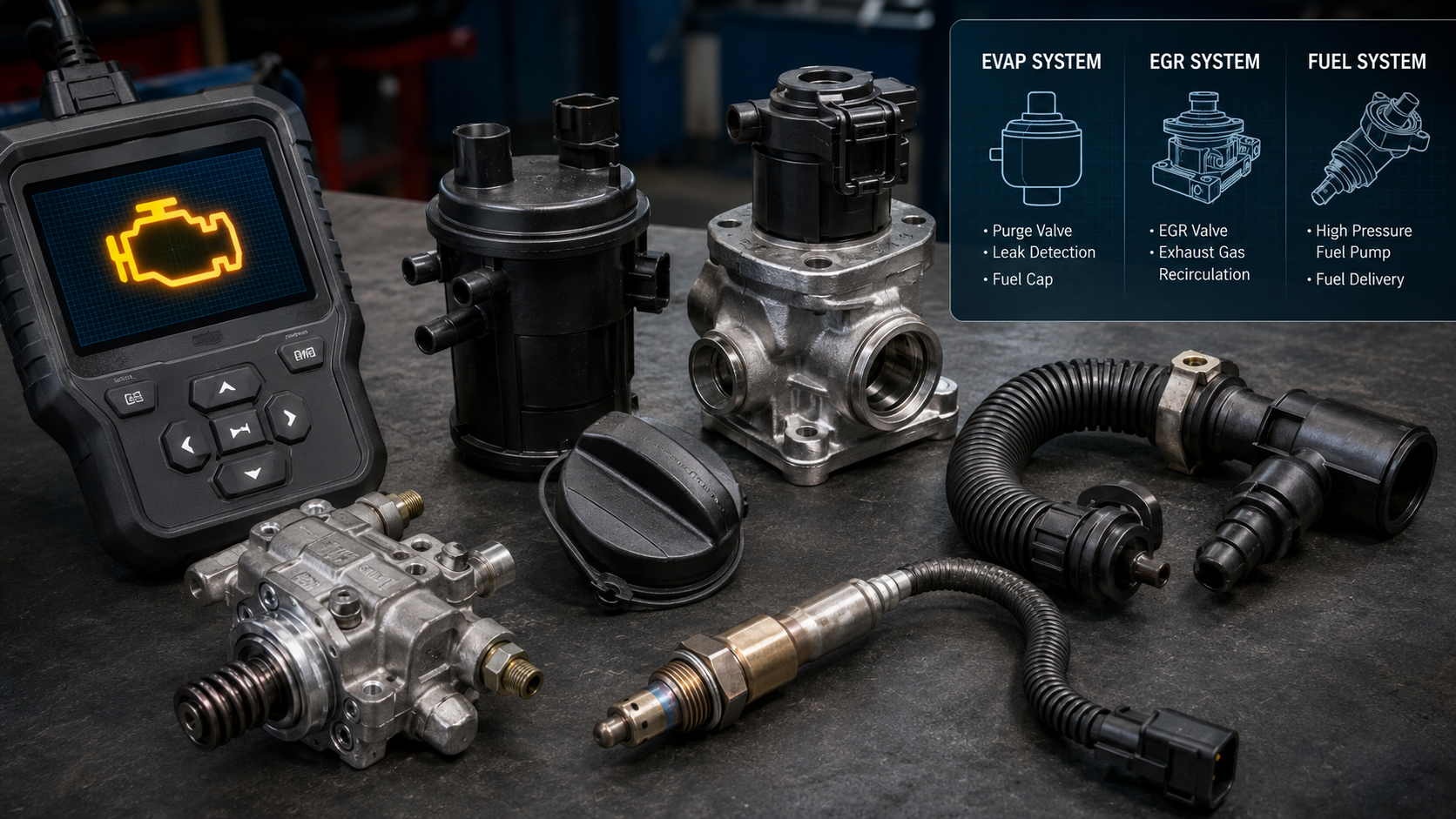
The check engine light is one of the most common Audi A4 maintenance questions we see at audioemparts.com. The B8, B8.5, and B9 A4 models with the EA888 turbocharged engine often set check engine light codes when certain parts fail or are replaced with non-genuine components. Below, I’ll cover the most frequent causes by generation, so you can pinpoint the fault, choose the correct OEM part, and fix the issue.
Not every A4 check engine light means a major problem, but it should never be ignored. Some codes point to minor emissions issues, while others warn of mechanical problems that can get worse if left unchecked.
Start Here: Pull the Fault Code Before Ordering Anything
A basic OBD2 scanner will show a P-code, but that’s just the first step. Audi-specific tools like VCDS or OBDeleven give you more detail, including the full fault description and freeze-frame data. Since several parts can share the same code on the A4, a full scan helps you avoid guessing and ordering the wrong part.
Most Common Check Engine Light Causes on the B8 and B8.5 A4 - 2009 to 2016
EVAP Purge Control Valve - P0441, P0446
On the B8 A4 with the 2.0T EA888 engine, the EVAP purge control valve is the most common reason for a check engine light. This valve manages when fuel vapors from the charcoal canister are sent into the intake for combustion.
If the valve sticks open or does not seal, the engine can run rich at idle, the EVAP system fails its test, and codes P0441 or P0446 usually appear within a couple of drive cycles. You might also notice a rough idle during warm-up, a stumble after refueling, or sometimes a fuel smell in the cabin when using recirculation.
The original purge valve on the B8 2.0T is a Pierburg unit designed for the EA888 EVAP system’s specific pressure and duty cycle. Aftermarket options are common, but they tend to fail much sooner than the genuine part. If your check engine light comes back soon after a purge valve replacement, the new part is often the problem.
EGR Valve - P0400 through P0408
On the B8 A4 with the EA888 Gen 1 engine, EGR valve problems are usually caused by carbon buildup rather than a mechanical failure. Over time, deposits collect on the valve and in the EGR passages, which can make the valve stick open or not close all the way. Codes in the P0400 to P0408 range point to EGR flow issues. You may notice a rough idle under load, a bit of smoke at idle, or sometimes a sulfur smell from the exhaust when the engine is warm.
The EGR valve on the B8 A4 is specific to the engine code. CAEB, CAEA, CDNC, and CPMA engines each use different valves and connectors. Always check your engine code from the sticker in the engine bay before ordering. When you replace the EGR valve, clean the EGR cooler and intake manifold at the same time. Installing a new valve without cleaning the passages often leads to the same codes coming back soon after.
Crankcase Breather Hose and PCV System - P0171, P0507
Crankcase breather problems on the B8 A4 are often mistaken for MAF or oxygen sensor failures because they trigger the same lean codes, P0171 and P0507. The key difference is that a damaged breather hose lets in unmetered air, which the MAF sensor does not detect, leading the engine to run lean. Before replacing sensors or injectors for lean codes, check every part of the breather hose assembly for cracks, collapsed areas, or loose connections.
Most Common Check Engine Light Causes on the B9 A4 - 2017 to 2024
EVAP Small Leak Codes - P0442, P0456
The B9 A4 has a more advanced EVAP system than the B8, with a leak-detection pump that pressurizes the fuel system to find even small leaks. Codes P0442 and P0456 usually mean there is a small leak, but most of the time the cause is a worn fuel cap seal, not a failed part. Before buying any EVAP components for a B9 A4, try replacing the OEM fuel cap and drive the car for two cycles. Many small-leak codes clear for good after a new cap.
High Pressure Fuel Pump - P0087
On the B9 A4 with the EA888 Gen 3B engine, the high-pressure fuel pump is a common wear item, especially as mileage increases. Code P0087 for low fuel rail pressure can cause rough cold starts, misfires at idle, or hesitation during hard acceleration. The HPFP is cam-driven, and its internal parts wear out over time. Aftermarket pumps often do not match the factory pressure specs, so using a genuine OEM replacement is the best way to fix the problem long-term.
AdBlue and NOx Sensor Faults - Diesel and Select Petrol Variants
If you have a B9 A4 with a diesel engine or a petrol engine with an SCR emissions system, AdBlue-related check engine faults can appear as the car gets older. These usually come from the NOx sensors, the AdBlue injector, or the SCR catalyst. On the B9, these parts are specific to the model year and build date. Supplying your VIN when ordering from audioemparts.com helps make sure you get the right sensor for your car.
When to Replace Related Parts Together on the A4
When repairing the EVAP system on a B8 or B9 A4, inspect the purge valve, vent valve, charcoal canister, and all vacuum lines. These parts tend to wear out around the same time, so if one fails, others may not be far behind. Only replacing the part that triggered the code and leaving old hoses or valves can lead to the check engine light coming back soon after.
When you replace the EGR valve on a B8 A4, always clean the intake manifold at the same time. Carbon buildup that caused the valve to fail also coats the manifold ports, which can reduce airflow and cause rough idle or performance issues even after installing a new valve.
Frequently Asked Questions - Audi A4 Check Engine Light
Can I drive my A4 with the check engine light on?
It depends on the fault. A steady check engine light with no drivability symptoms generally indicates an emissions fault that is not immediately damaging. A flashing check engine light indicates an active misfire; immediately reduce speed and load, and have the vehicle diagnosed before continuing to drive.
Will clearing the code fix the check engine light?
Clearing the code removes the light, but the underlying fault remains. The light returns within one to two drive cycles in most cases. Clearing codes without addressing the fault can also interfere with smog testing readiness monitors.
How do I know if my A4 needs a B8 or B9 EVAP purge valve?
The B8 A4 covers 2009 to 2016, and the B9 covers 2017 onward. If you are uncertain, provide your VIN when ordering from audioemparts.com, and we will confirm the correct part for your specific build date before shipping.
Will an aftermarket purge valve work on my Audi A4?
Aftermarket purge valves exist, but they fail much more often on the B8 EA888 engine than the genuine part. The OEM Pierburg valve matches Audi’s pressure and duty cycle specs. At audioemparts.com, all purge valves are genuine Audi OEM parts.
What is the most common cause of the check engine light on the B9 A4?
On the B9 A4, the most common reason for a check engine light is an EVAP small leak code caused by a worn fuel cap seal. Always check the fuel cap before buying other EVAP parts.
Shop Genuine OEM Audi A4 Check Engine Light Parts at AudiOEMParts.com
You can find genuine OEM EVAP purge valves, EGR valves, crankcase breather assemblies, high-pressure fuel pumps, NOx sensors, and fuel caps for every A4 generation at audioemparts.com. All parts are genuine Audi OEM and can be verified to your VIN and engine code. For help confirming fitment, email [email protected] with your VIN before ordering.